Every AI company's answer to "my assistant forgets me" is the same word: more.
More memory. A bigger context window. Another memory feature that follows you between chats. The pitch is always that the assistant would finally be useful if it could just hold on to more of what you tell it.
I spent a while believing that. Then I built a system that actually remembers, and the problem turned out to be the opposite of what I expected.
The half that Nate got right
If you have not run into it yet, the person who framed this clearly is Nate B. Jones. He built and open-sourced something he calls the Open Brain — a small database that lives outside of any one AI, holds what you have told it, and lets any assistant you use read from the same place. Claude, ChatGPT, whatever ships next month. One memory. Every tool plugs into it.
I built one for myself, following his design. It changed how AI fits into my work, and not for the reason I assumed going in.
The obvious win is that you stop starting from zero. Open a new chat, and it already knows what you are working on. That is real, and it is nice.
The win that actually matters is quieter, and it is about who owns the thing. When your memory lives inside Anthropic's product, it is Anthropic's to keep. When it lives inside OpenAI's, it is theirs. Move to the other one and you leave your context behind like a security deposit you are never getting back. An external brain breaks that. The memory is a file you own. The AI is just the thing reading it this week. If a better model comes out, you point it at the same brain and keep going — nothing to migrate, nothing left behind.
Nate has a line for it that stuck with me: you own the memory, and you rent the intelligence. The intelligence is a commodity now. New ones arrive every few weeks and they all want to be your only one. The part that is actually yours, the part worth protecting, is the accumulated record of what you have thought and decided and tried. Keep that outside the walls, and no single company gets to hold it hostage.
So Nate solved a real problem, and he solved it well. Your memory should be portable, and it should be yours. I am not here to argue with any of that.
I am here to tell you what happens next.
What happens once it remembers everything
Once you have a brain that keeps everything, you meet a problem you never had with an assistant that forgot.
An assistant that forgets is annoying, but it is honest. Every session it admits it knows nothing and asks you to catch it up. You are never confused about where you stand.
An assistant that remembers everything stops admitting that. It hands you back things with total confidence — and some of those things are out of date, some are half-true, and some it simply made up months ago and filed away as if you had said them.
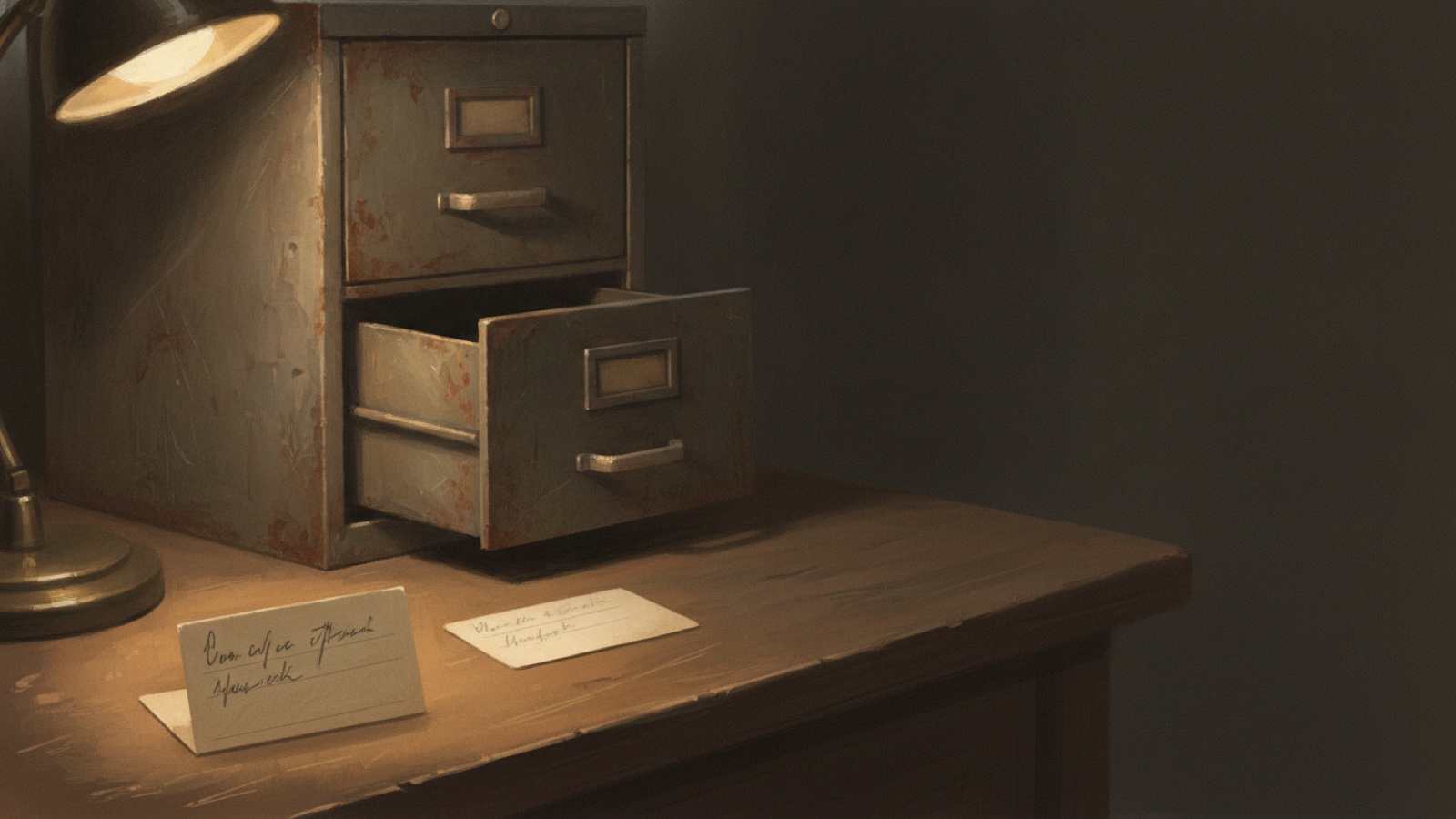
Here is the part that gets people. In a memory like this, a fact you carefully confirmed and a guess the AI took a flyer on look exactly the same after a few weeks. Same tidy sentence. Same calm certainty. Nothing on either one says you can trust this or nobody ever checked this. It is two index cards under a lamp, one in ink and one in fading pencil, and from where you are sitting you cannot tell which is which.
Nate names this failure himself, and it is worth repeating: a memory that goes stale does not go quiet. It goes wrong, in clean, confident prose that reads like something you already know. A gap you can see. Bad memory you cannot, because it sounds exactly like good memory.
That is the whole trap. More memory does not fix it. More memory makes the pile bigger and the wrong cards harder to find. Capacity was never the thing standing between you and an assistant you could trust. Governance was.
A memory policy, in four plain rules
A memory policy is just the set of rules for what your brain is allowed to keep and how it has to label what it keeps. It is not technical. You could write it on an index card. Mine comes down to four things.
One: every memory says where it came from. Did I actually say this, or did the AI infer it? Those are not the same and they must never be stored as if they were. In my system every entry is stamped — this is something Travis said, this is something the AI guessed. When I read the brain back, I can see at a glance which cards are in ink and which are in pencil.
Two: a guess is a guess until a human signs off. An inference the AI made does not get to graduate into a fact just because time passed and nobody argued with it. It stays flagged as unconfirmed until I look at it and say yes. Age is not evidence. The oldest wrong idea in the drawer is still wrong.
Three: when something changes, the old version has to step down. New information cannot just get stacked on top of the old, or the brain ends up holding two answers that quietly contradict each other and offering you whichever it grabs first. A newer decision has to retire the one it replaced, on the record, so there is one live answer and a clear trail of what it used to be.
Four: everything has a place, and temporary things do not get to pretend they are permanent. Where I am on a project today is not the same kind of thing as a decision I made for good. One changes constantly; one is supposed to hold. Mixing them is how last Tuesday's status note ends up being treated as a standing rule six months later.
None of that is fancy. It is closer to how a careful person keeps records than to anything that sounds like AI. But it is the difference between a memory that gets more trustworthy as it grows and one that just gets more crowded.
Where this is going
For the last couple of years, being good with AI mostly meant being good at asking. Write the clear prompt, frame the question well. That skill is not going anywhere.
But as these tools start to remember, a second skill shows up next to it, and almost nobody is teaching it yet. It is the ability to govern what gets kept — to decide what is worth remembering, to insist that a guess be labeled a guess, and to make sure that what is out of date actually steps aside instead of sitting in the drawer looking exactly as confident as the truth.
Get your memory out of any one company's walls. Nate is right about that, and it matters more the longer you use these tools. But once it is yours, the work is not over. A brain you own and never govern is not an asset. It is just a bigger pile of sticky notes that now also disagree with each other.
More memory was never the answer. A policy for it is.
Sorting out what any of this means for your own work — what is worth keeping, and how to keep it so you can actually trust it later — is the kind of thing I help people think through. Reach out.