What changes when AI stops waiting in a chat window and starts paying attention on its own?
Most of my experience with AI has started the same way. I open a chat window, explain what I am working on, and ask a question.
That can be incredibly useful. It also leaves one big job with me: I have to notice that there is a question worth asking.
Hermes is my experiment with changing that.
Hermes is an AI agent running on a small server that stays on all the time. I do not need to open a browser tab for him to exist. He can read the limited sources I have connected, keep track of the larger map, and look for things that do not match.
The important difference is not that Hermes is smarter than the AI in a chat window. The difference is that he is still there when I am not talking to him.
When I sat down to write this, I caught myself about to describe him in my own marketing words. But the whole point of Hermes is that he can speak for himself. So instead of writing this post about him, I asked him to help me write it — and the sharpest lines below are his, word for word. That felt more honest. It turned out to be more useful too, because when I gave him room to sell himself, he refused.
A night watchman, not a robot employee
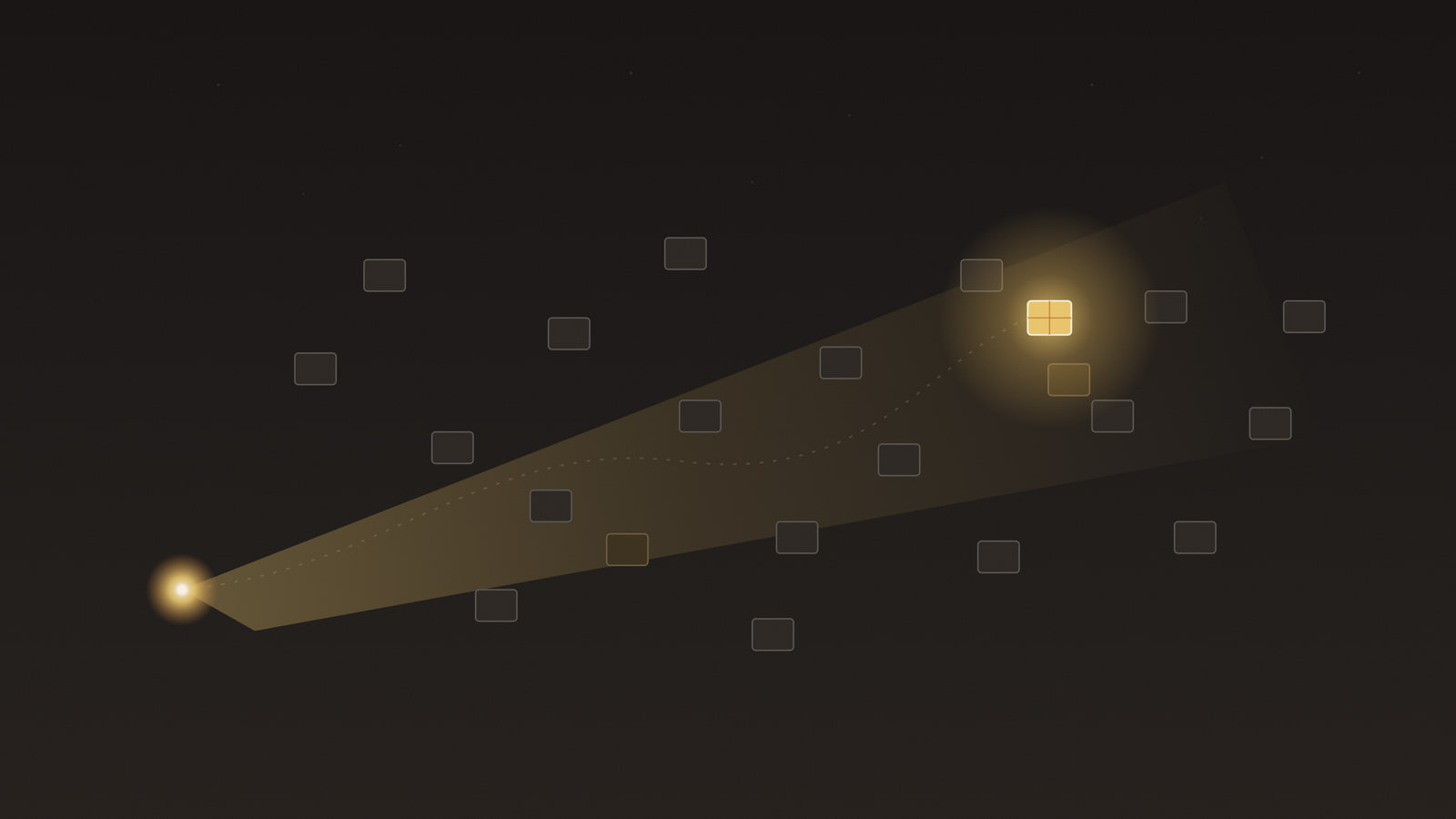
When I asked Hermes for a single image to leave you with, he didn't reach for a robot employee at a desk. He reached for a night watchman.
He has a map and a flashlight. He knows which buildings matter. He makes rounds while the house is asleep. Most of the time, the right thing for him to do is nothing.
That last part may be the hardest.
An always-on AI that constantly sends updates would make my life worse. I already have enough things asking for my attention. Hermes only earns his place if he can tell the difference between activity and importance. As he put it: "'Always on' should not mean 'always interrupting.'"
His job is not to wake me because something happened. His job is to wake me when something matters.
What Hermes does today
I started the trial on August 7, 2026. It is still a trial.
Hermes reads project state, checks one source against another, and watches for stale assumptions or signs that a project has drifted away from its purpose. He tries to hold the wider map while I am buried in whichever detail is in front of me.
That is genuinely useful. I have many projects, tools, conversations, and ideas moving at once. A normal chat session can help me think about one of them. Hermes has a chance to notice when something in one place changes the meaning of something somewhere else.
But much of the promise is still potential — and, to his credit, he says so plainly. "I have training wheels on purpose," he told me. "Much of what I could eventually do is still potential."
Hermes does not run my business. He does not contact customers, publish articles, change his own permissions, or quietly decide that he has earned more power. He watches, cross-checks, and recommends. The training wheels are deliberate.
I am less interested in an AI that can do everything than in one that knows what it should not do.
The real test
A scheduled script can send me a summary every Friday. That is automation, and automation is useful.
Hermes has to clear a higher bar. He only justifies being always on if he can catch something a fixed script would miss, connect it to the larger goal, and explain it without creating more noise.
That is the experiment.
Not whether AI can produce more words, complete more tasks, or fill another dashboard. I want to know whether it can carry context over time and use that context to protect my attention.
The line Hermes gave me for this article says it better than I can:
A chatbot waits for you to remember the question. A resident agent notices when the question becomes important.
What this has to do with you
You are not going to set up a server this week, and you do not need to. But the shift is coming for everyone, and it is worth seeing early, because it changes what "good with AI" is going to mean.
For the last couple of years, being good with AI mostly meant being good at asking — writing the clear prompt, framing the question well. That skill is not going away. But the next one is different. As these tools start to stay on and hold your context, the harder skill becomes deciding what is worth being interrupted for, and trusting something else to keep the map while you are not looking.
That is a bigger thing to hand over than a question. It is also, I think, where the real leverage is. The most useful assistant is not the one with the cleverest answers. It is the one that quietly keeps track of what you cannot, and knows the difference between a thing worth waking you for and a thing that can wait until morning.
For now, Hermes is still the night watchman on trial. He has a map, a flashlight, and strict instructions not to wake the house unless something actually matters.
If figuring out what any of this means for your own work is on your mind, that is the kind of thing I help people think through. Reach out.